Draft · internal preview · not yet sent to the client
Innovation Solaire QuébecDanPro Électrique
Ref. ISQ-VH-2026-01 · v2
October 3, 2026
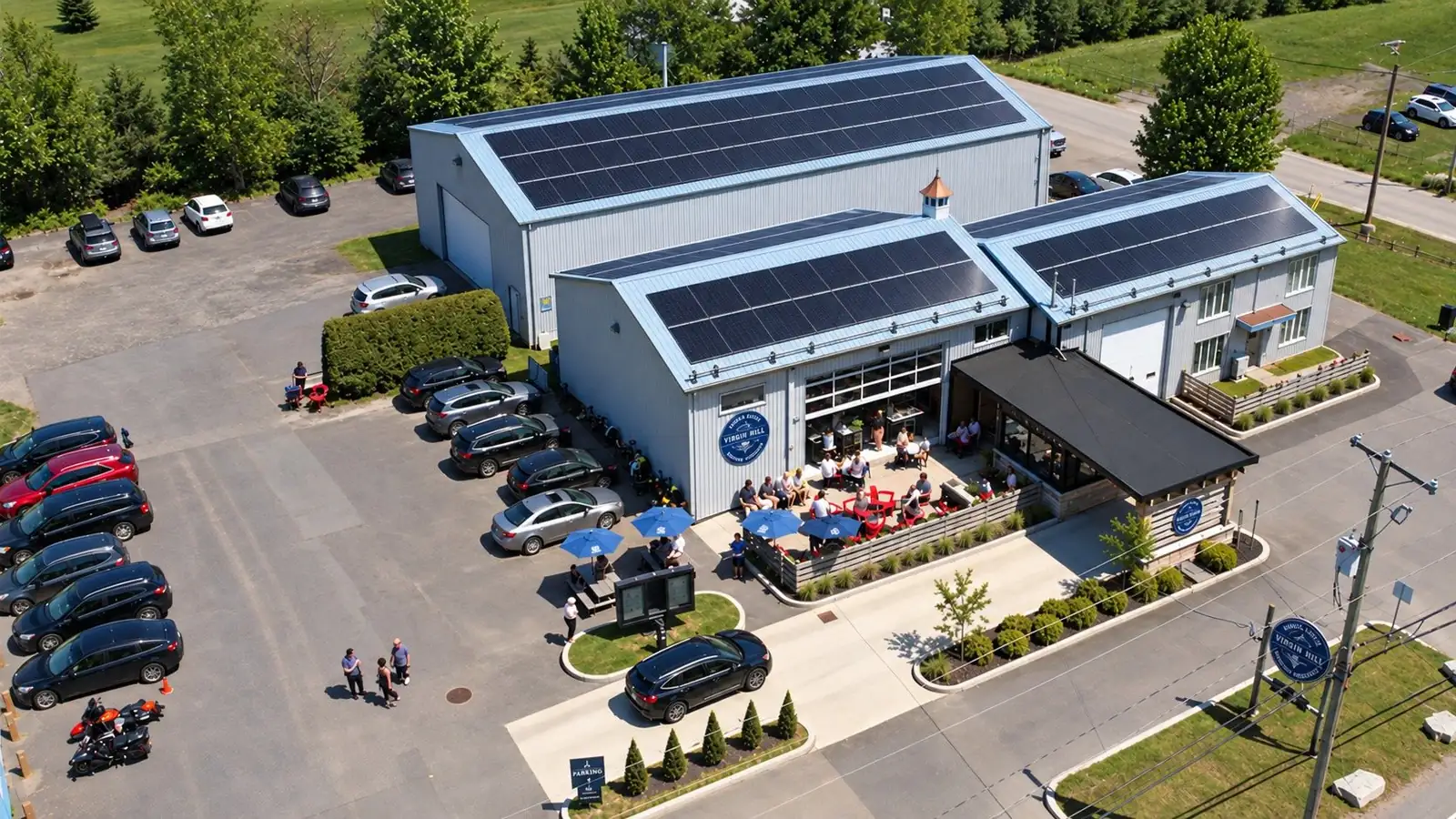
Aerial rendering of the Virgin Hill site at 770 chemin Lakeside with solar panels on all three roofs
Illustrative rendering · Plan B
Prepared for Brûlerie Virgin Hill inc. · Matthew Greer

Keep the café open. Then cut the bill.

770 chemin Lakeside, Foster, Québec. A backup system built from your own appliance list, with solar that pays for it.

< 20 msswitchover in an outage
$25,970 → $6,800annual bill, with Plan B
6.5 yearsPlan B payback

Preliminary · budget prices ± 15% · before taxes

Your two plans

Start with what you asked for. Add what pays for it.

Plan A is the backup power you came to us for. Plan B adds solar to the same inverter, and that is the part that pays the whole system back. Pick a view to see the numbers change.

Plan A · backup power
$161,856

net investment, after the 30% federal clean technology tax credit

Equipment, engineering, Hydro-Québec permits
$191,223
Installation, DanPro Électrique
$40,000
Before incentives
$231,223
Federal tax credit 30%
− $69,367
  • 1 Sol-Ark 60K hybrid inverter, 2 L3 HV-60 batteries (110 kWh usable)
  • Essential-loads panel with automatic load shedding
  • Your existing generator as the backup input
Plan B · add-on to Plan A
$133,623

net add-on, after the Hydro-Québec subsidy and the tax credit

Equipment, engineering, Hydro-Québec study
$230,650
Installation, DanPro Électrique
$87,500
Before incentives
$318,150
Hydro-Québec subsidy
− $127,260
Federal tax credit 30%
− $57,267
  • 252 LONGi 620 W bifacial panels, 156 kWp
  • 2 more Sol-Ark 60K inverters, 225 kVA transformer
$161,856net investment, Plan A
4 h 45open on batteries alone
< 20 msswitchover, nothing stops
$860k20-year total cost, about the same as a generator
Outage simulator

The power goes out mid-service. What keeps running, and for how long?

Built from the appliances on your list, sorted into tiers. Choose what stays on and see how long the batteries carry it.

Batteries alone, no sun
4 h 45no sun

The café keeps serving: espresso, ovens, dishwashers and all cold storage.

0.02 sGrid fails. Inverter takes over before the lights flicker.
Hours 1–5Batteries carry your chosen loads.
Long outageYour generator recharges the batteries in cycles.

Opening hours, full batteries, year 1, average duty cycles on nameplate ratings. Generator recharge requires a unit compatible with the inverter's three-phase 480 V input; we check your generator's nameplate at the site visit.

Plan B · your bill and your return

What Hydro-Québec raises, solar absorbs.

Your bill comes from 48 real invoices across your three meters. Move the slider to test any rate increase, including none at all.

Your actual increases: 3.6% in 2025, 3.8% in 2026.

$25,970your bill today, per year
$6,800with Plan B, year 1
6.5 yrsPlan B payback
16.3%Plan B annual return, 25 years
$33,880bill in year 10 without solar
$9,764bill in year 10 with Plan B
0k200k400k600k800k1000kyr 1yr 5yr 10yr 15yr 20$499k$856k
Do nothingGeneratorPlan APlans A + B
Winter in Québec

“Solar doesn’t work here in winter.”

It is the first thing every business owner in Québec asks. Winter produces less, and that is already in every number above. November to February make about a fifth of the year's output, and the system is designed around it.

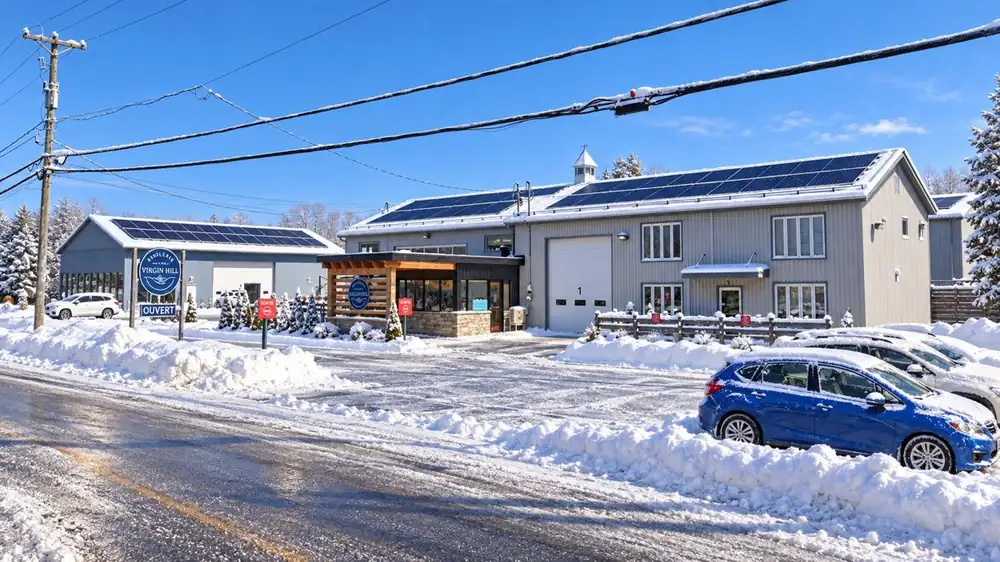
Rendering of the café after a snowstorm on a clear day, panels free of snow
The day after a storm: cold and bright. Cold panels produce more per ray of sun.
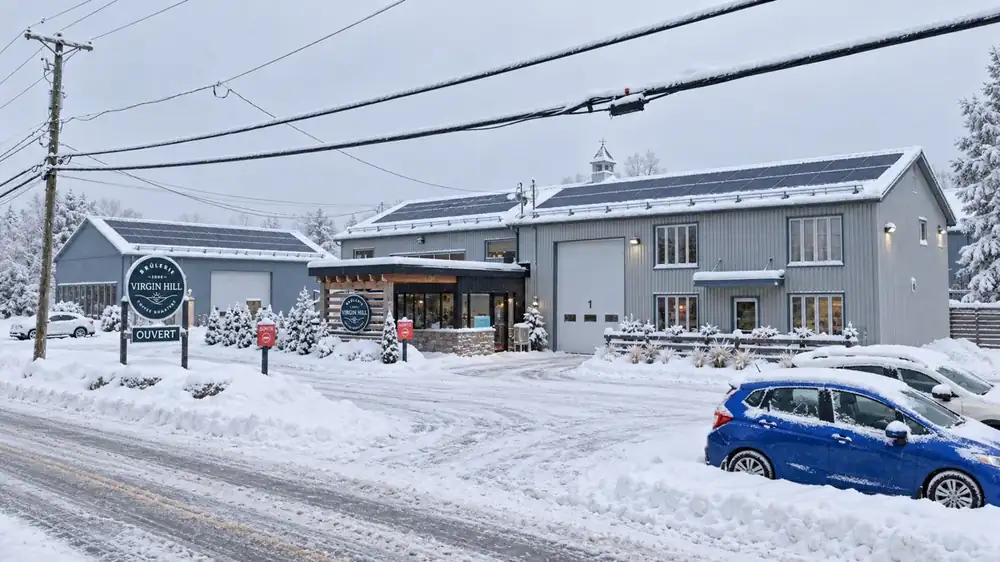
Rendering of the café on a grey, snowy day
A grey day under snow: production drops, and the kilowatt-hours banked in summer carry you.
010 MWh20 MWh30 MWhJanFebMarAprMayJunJulAugSepOctNovDec
Your consumption, 3 meters (Apr 2025 – Mar 2026)Solar production, snow losses included

“The panels will be buried.”

The panels sit on 18–19° metal roofs. Dark glass warms in the sun and the snow slides off, usually within a day or two after a storm. Snow losses are already deducted.

“There’s no sun in winter.”

There is less. Cold makes panels more efficient, about 0.28% more output per degree below 25 °C, and the bifacial back side catches light reflected off snow, a gain we did not count.

“My winter bill goes back up.”

Higher than in summer, well below today's. With net metering, summer surplus is banked with Hydro-Québec and credited against winter use at the full rate, reconciled every 24 months.

“Can the roof take the snow?”

Each panel is rated for 5,400 Pa of front load, about 550 kg per square metre. A structural engineer validates your steel trusses for local snow loads before installation.

“And a winter outage at night?”

Plan A does not depend on the sun. The batteries sit indoors in a heated room, take over in under 20 ms, and your generator recharges them for as long as the outage lasts.

“Is Québec sunny enough?”

Your own shading study shows your roofs capture 84% of the ideal solar resource, with only 1% lost to shade.

Your system

Designed for your roofs, from your data.

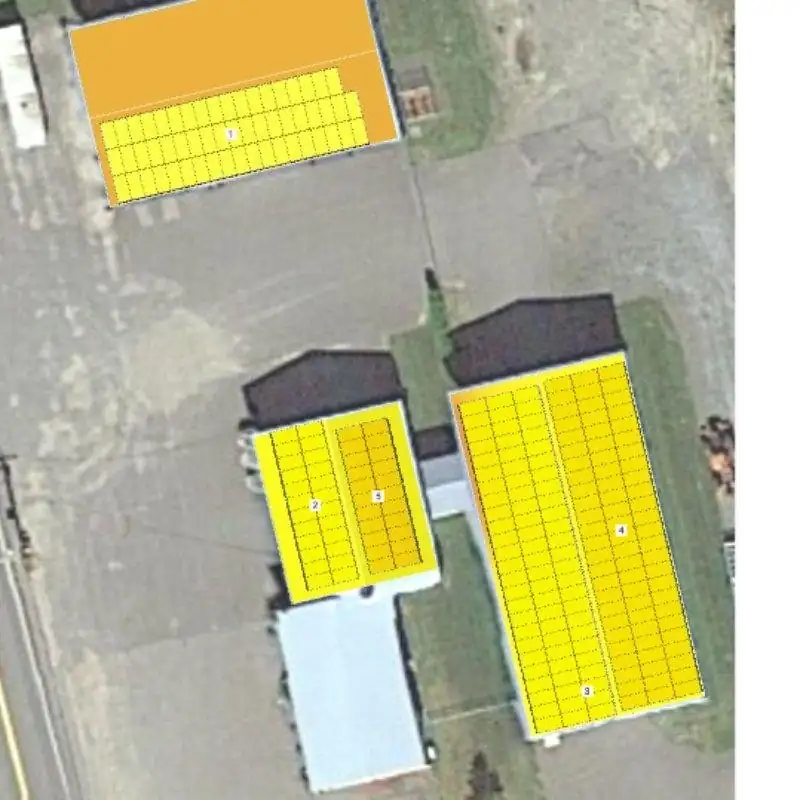
Shading study map of the 252 panels on the three roofs
Shading study, June 26, 2026: lighter panels receive more sun. Average shading loss 1%.
110 kWhPlan A · 2 Sol-Ark L3 HV-60 batteries, indoors
60 kWPlan A · Sol-Ark 60K hybrid inverter, 480 V
156 kWpPlan B · 252 LONGi 620 W bifacial panels
156 MWhPlan B · produced per year

Engineering drawings from day one. Rails clamp to the top of the roof ribs, with no drilling between them. Panels carry a 30-year production warranty; inverter and batteries are warranted 10 years.

The questions you asked in May

Your questions, answered.

Which circuits stay on during an outage?

Only those moved to the new essential panel: cold storage, espresso, ovens, dishwashers, Internet and lighting. Ice cream machines and heat pumps are shed automatically when needed.

Can it restart during a winter outage?

Yes. The inverter forms its own island from the batteries, without the grid. If the batteries run low, it can start your generator automatically through its two-wire start input, if your unit allows it.

Battery ageing and inverter life?

The batteries are lithium iron phosphate, warranted 10 years, with about 80% of their year-1 capacity still available in year 10 in our model. Used mainly for backup, they cycle little. Inverters are warranted 10 years; we plan for a replacement around year 15.

Which rate increase did you assume?

3% a year, below what you actually saw. Set the slider above to 0% to see Plan B with rates frozen: it still pays back in about 7 years.

When do the incentives arrive?

The Hydro-Québec subsidy is paid after commissioning and connection approval. The 30% federal credit is claimed with your tax return; your accountant confirms eligibility. Our installer documents the required labour conditions on site.

Why not a generator plus batteries?

That is what Plan A is: batteries for instant, silent backup, and your existing generator for long outages, without buying a new whole-site generator.

What about the roaster and the building owner?

The roaster was not on your list; we will look at it during the site visit. The building owner's written consent is needed before work starts, and we can present the project with you.


Next steps

From decision to switch-on.

Step 1

Meeting

We walk through this proposal at your place, with DanPro Électrique.

Step 2

Site visit

Circuits measured over a week, generator checked, roofs inspected.

Step 3

Firm proposal

Fixed prices, revised drawings, service contract.

Step 4

Hydro-Québec

We file the connection and subsidy requests.

Step 5

Switch-on

Plan A first; Plan B on the same equipment when you are ready.

Book your walkthrough

Michaël Ferland, President & CEO · Innovation Solaire Québec

450 284-1010info@innovationsolairequebec.com